How Adam Dropped His A1C By 6 Points With Type 1 Diabetes While Eating more Carbs!
If you live with type 1 diabetes and feel like you are doing everything right but still chasing spikes and lows all day, Adam’s story will feel very familiar.
Adam was an endocrinologist’s dream. He had:
Type 1 diabetes
An A1C under 7
A 65 percent time in range
A consistent insulin routine
A healthy lifestyle
On paper, he was a model type 1 diabetes patient. But what it took to maintain those numbers was exhausting. He had to:
Constantly check his blood sugar
Frequently correct with insulin
Treat lows with glucose or juice
Ride out the rollercoaster of spikes and crashes
He believed this was as good as it could get with type 1 diabetes.
Then he used The Pohlman Method to work on root causes inside his body, not just his pump settings and carb counts. The result
A1C down by 6 points
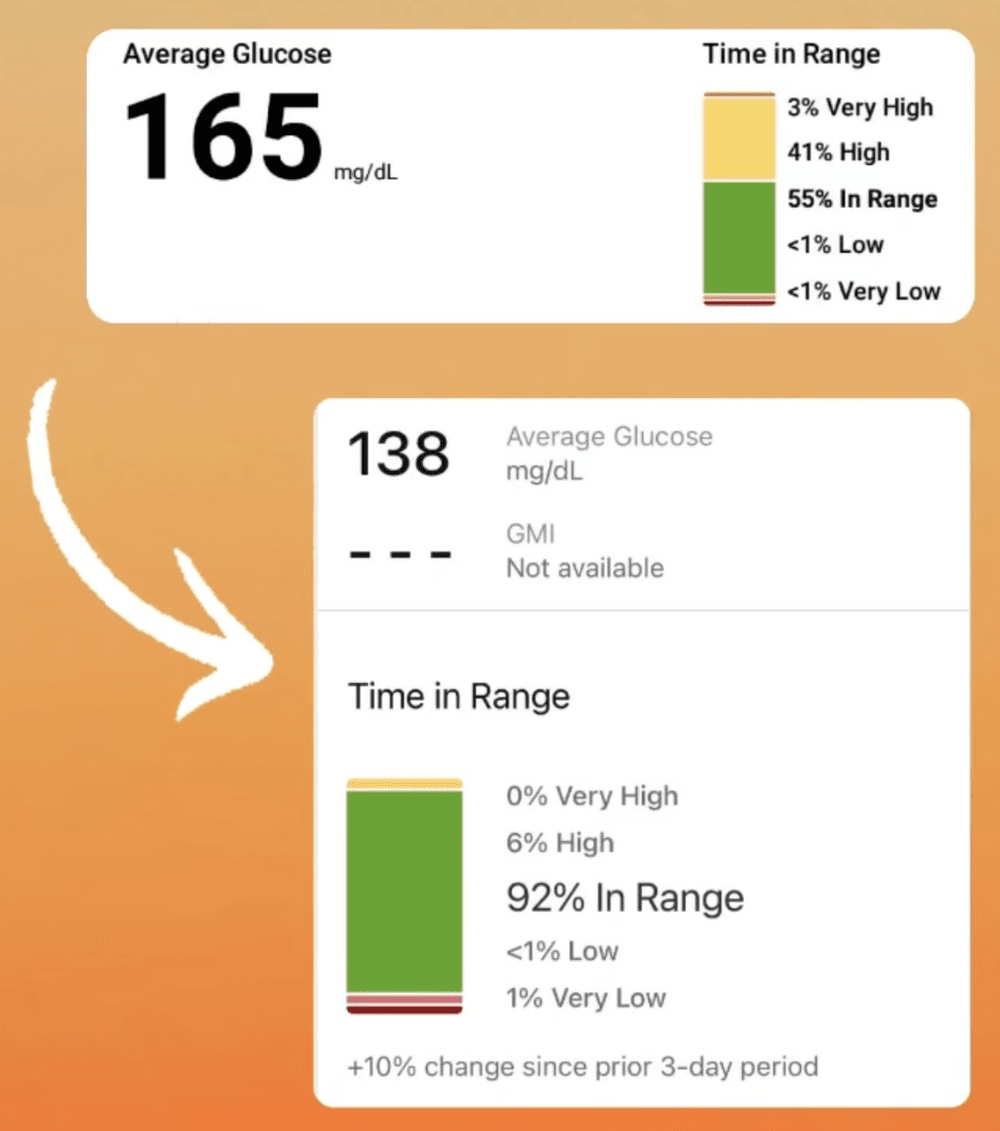
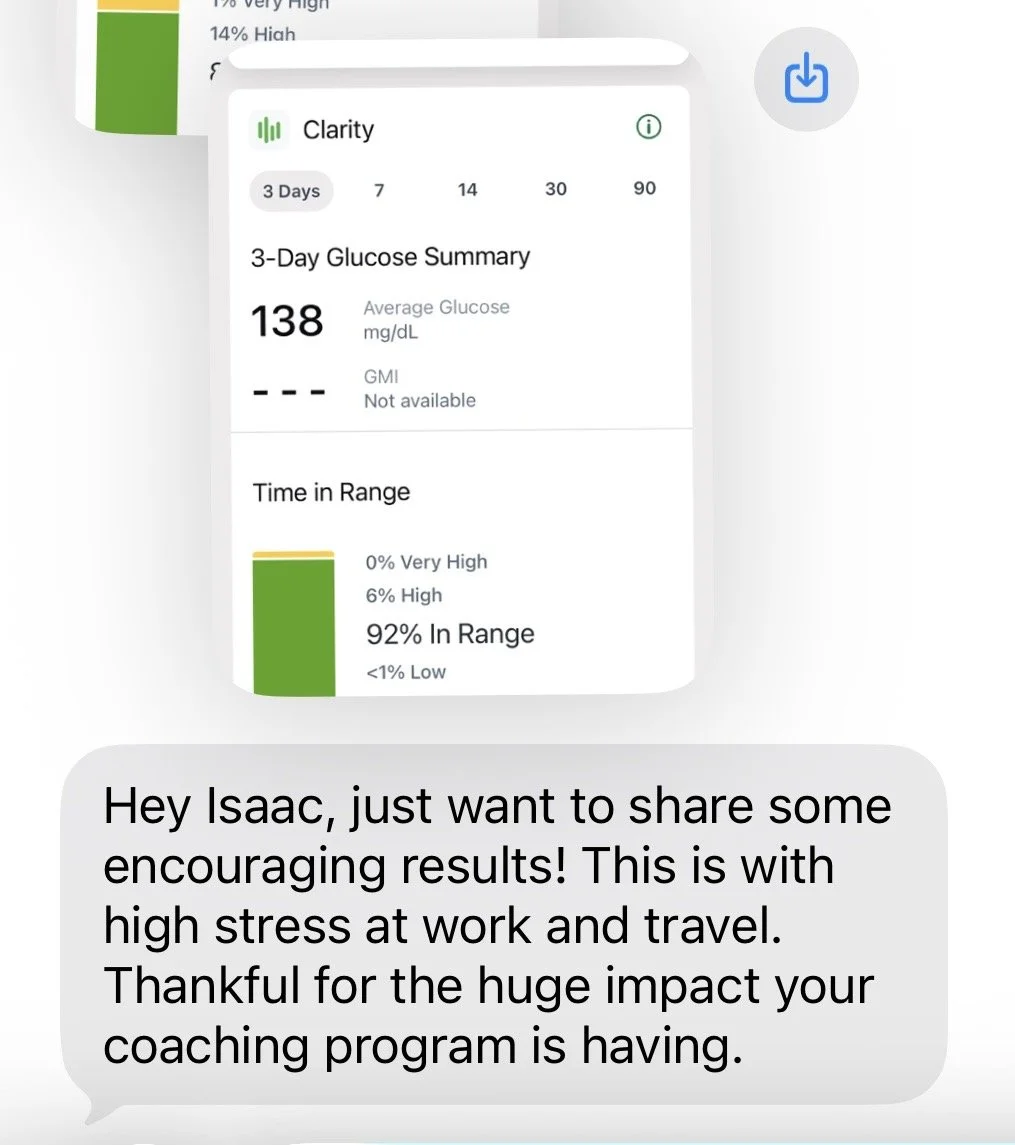
Time in range up from 65 % to 90%
Lows cut in half
More carbs without extra chaos
Less mental energy spent micromanaging blood sugar
And he kept this blood sugar stability even while on vacation with his kids.
Who We Are And Our Root Cause Blood Sugar Approach For Type 1 Diabetes
I’m Isaac Pohlman, a registered dietitian, fellow person with type 1 diabetes, and the CEO of The Pohlman Institute.
Our team helps clients all over the world:
Balance blood sugar
Lower A1C
Improve insulin sensitivity
Calm blood sugar spikes and crashes
Restore their health
without cutting out carbs or relying only on medication.
Inside our coaching program, The Pohlman Method, we focus on:
Finding your sweet spots for carbs, insulin, movement, and lifestyle
Reviving your metabolism so your body can process carbs more effectively
Addressing deeper mineral imbalances and stress patterns that drive blood sugar issues
Adam’s type 1 diabetes case study is a great example of how this approach can lower A1C and improve time in range without asking you to be perfect or give up carbs.
When you’re ready to do that as well, you can apply here to get support, guidance, and accountability from a team that has been where you are and truly understands blood sugar!
Adam’s Starting Point Model Type 1 Diabetes Patient But Constantly Exhausted
When Adam joined us, he was already doing a lot right. He:
Ate a mostly healthy diet
Took insulin as prescribed
Monitored his CGM frequently
Stayed active regularly
His A1C was under 7 and his time in range was 65%, which most endocrinologists would consider a success.
But the way he had to work for those results was not sustainable.
He was checking his blood sugar all day
He was constantly correcting highs with extra insulin
He was constantly treating lows with glucose or juice
He still had frequent spikes and crashes
He was not just managing type 1 diabetes. Type 1 diabetes was managing him. Our goal together was simple:
Help Adam lower his A1C and stabilize his blood sugar in a way that
Required fewer corrections
Created fewer lows
Let him enjoy his life and his kids
Still allowed him to eat carbs
To do that we looked beyond his endocrinology visits and focused on three big levers.
Step 1: Using Biofeedback To Find His Sweet Spot For Carbs And Insulin
Most people with type 1 diabetes are taught to focus almost only on numbers:
A1C
Time in range
CGM trends
Insulin doses
The problem is that when you only fixate on numbers, you can accidentally ignore the rest of your health.
With Adam we started using biofeedback.
Biofeedback is the real time information your body gives you:
Energy
Sleep
Mood
Stress
Digestion
Cravings
Alongside his blood sugar numbers, we used his biofeedback to guide decisions about:
How many carbs to eat at meals
Which meals kept him full and stable the longest
Where his insulin to carb ratios and basal settings were likely off
Which routines actually helped him feel better, not worse
The goal was not just “flat lines at any cost, but rather steady blood sugar, fewer highs and lows, and a body that actually felt good day to day.
By paying attention to his biofeedback, we started to see patterns in which carb amounts and meal structures gave him the best combination of:
Stable blood sugars
Good energy
Less need for constant corrections
This was a key step in improving time in range without more restriction.
Step 2: Lowering His Cell Danger Response To Calm The Blood Sugar Rollercoaster
The next big lever was Adam’s cell danger response.
The cell danger response is your body’s internal stress state. When it is elevated, your body acts like it is under constant threat.
In this state:
Your body becomes more insulin resistant
The liver pushes more glucose into the bloodstream
The muscles and tissues are less willing to take in glucose
Blood sugar runs higher and swings more easily
For someone with type 1 diabetes, that looks like:
Spikes with stress, travel, or busy days
High blood sugar during hectic work or parenting days
Rollercoaster patterns where highs are followed by lows and vice versa
This was exactly what Adam saw, especially when:
Traveling
Playing with his kids
Dealing with life stress
He was doing an incredible job managing his diabetes moment to moment, but the underlying stress state in his body kept pushing blood sugar out of range.
So inside The Pohlman Method we focused on lowering his cell danger response by:
Building simple routines that gave his nervous system a chance to calm down
Adjusting his schedule so he had more margin and recovery time
Incorporating movement and activities that reduced stress rather than added more strain
By calming this internal stress response, we made it easier for his body to:
Respond to insulin
Keep blood sugar stable
Avoid wild swings with every little trigger
This helped move him from constantly reacting to his CGM to having more predictable, stable trends.
Step 3: Balancing Minerals To Improve Insulin Sensitivity And Time In Range
The third key piece for Adam was mineral balance.
Minerals play a major role in blood sugar, insulin sensitivity, and stress tolerance. For Adam we used the Pohlman Lab Bundle to look at his mineral patterns.
We found:
High stored iron
Low vitamin A and copper
A high adrenal ratio
Here is what that means for blood sugar:
High stored iron increases inflammation and makes it easier for blood sugar to run high
Low vitamin A and copper make it harder for the body to use that stored iron properly
A high adrenal ratio is a sign of high internal stress and an elevated cell danger response
On top of that, when someone has a high stress response and uses a lot of insulin, they tend to burn through potassium quickly.
Potassium is crucial for:
Insulin sensitivity
Carb tolerance
Thyroid hormone function
Stable blood sugar
So Adam’s mineral picture explained a lot:
Why his body wanted to push blood sugar up
Why stress made things worse
Why he needed so much insulin to keep numbers in range
We worked on:
Helping his body hold on to more potassium
Supporting better use of stored iron with vitamin A and copper
Reducing internal stress so his adrenal system was not always on high alert
By balancing these minerals we were able to support his insulin sensitivity and help his body respond better to the same insulin he was already taking.
Adam’s Results Lower A1C, Higher Time In Range, Fewer Lows
After working through these three areas inside The Pohlman Method, Adam’s results spoke for themselves. He:
Dropped his A1C by 6 points
Increased his time in range from 65% to 90%
Cut his low blood sugars in half
Enjoyed more carbs without big spikes
Felt more confident adjusting his insulin
Spent less time micromanaging his blood sugar
Had more tools than just carb cutting and extra insulin
He saw these improvements even while on vacation with his kids, which is usually when blood sugar gets harder, not easier.
Instead of feeling like his CGM and insulin pump were running his life, he started to feel like he had his life back with type 1 diabetes.


What Adam’s Type 1 Diabetes Case Study Means For You
If you have type 1 diabetes and:
Your A1C is “good” but you feel exhausted from chasing numbers
You are constantly correcting highs and treating lows
You are scared to eat carbs because of unpredictable spikes
You feel like this is as good as it gets
Adam’s story is a reminder that there is more that can be done once you look under the surface.
By working on
Biofeedback and sweet spots for carbs and insulin
Lowering the cell danger response
Supporting minerals like iron, copper, vitamin A, and potassium
you can often improve
A1C
Time in range
Number of lows
Quality of life
without cutting carbs or trying to be perfect.
If you are ready to stabilize your blood sugar and feel better in your everyday life while eating carbs, like Adam did, you can apply here to get support, guidance, and accountability from a team that has been where you are and truly understands blood sugar!