How Joe Lowered His A1C From 10.2 To 6.8 In 5 Months With Type 2 Diabetes
If you have been diagnosed with type 2 diabetes and you are already:
• Eating clean
• Taking Metformin as prescribed
• Avoiding alcohol, fast food, and smoking
Yet your A1C is still high, you are not alone. This is exactly where our client Joe started.
He came to us with an A1C of 10.2, already diagnosed with type 2 diabetes, already doing “everything right” on paper, and still not seeing his blood sugar come down. On top of that, he was not sleeping through the night and he started to notice side effects from his medication, including more moodiness, fatigue, and low motivation.
Shortly after his diagnosis, Joe had a one hundred percent blockage in his coronary artery. It was a near death experience. He only caught it by minutes. That was the turning point where he decided he was done with band aid approaches and wanted to actually address the root cause of his high blood sugar and A1C.
Five months later, Joe lowered his A1C from 10.2 to 6.8 while still eating carbs and using a more root cause focused approach. Here is how he did it.
Who We Are And How We Help Clients Lower A1C
I’m Isaac Pohlman, a registered dietitian, fellow person with type one diabetes, and CEO of The Pohlman Institute. Our team has helped over a thousand clients all over the world:
• Balance blood sugar
• Lower A1C
• Improve insulin sensitivity
• Restore their health
Without cutting out carbs or relying only on medication to do the work!
If you want to reverse high blood sugar and improve A1C without extreme restriction, Joe’s story will show you what is possible when you address the real drivers behind high blood sugar.
If you want support to do that for yourself, you can apply to work with me and my team here!
Why Eating Clean And Metformin Were Not Enough For Joe
Joe was already
• Avoiding fast food
• Not drinking or smoking
• Taking Metformin exactly as prescribed
On paper, it looked like he was doing everything “right” for diabetes management. But his A1C was still 10.2, his sleep was poor, and he was experiencing side effects he traced back to his medication.
This is where many people with type 2 diabetes get stuck. They are told to:
• Eat less
• Eat cleaner
• Lose weight
• Take Metformin
and when that does not fix their A1C, they feel like the problem must be them.
In Joe’s case, the real problem was not only about food or medication. It was his stress response and how his body was handling carbs, stress, and sleep at a deeper level. So instead of another diet, we focused on three core areas to lower his A1C naturally:
Calming his cell danger response and stress hormones
Eating based on his biofeedback and improving meal density
Creating an evening wind down routine that protected his circadian rhythm
Step 1: Calming The Cell Danger Response And Stress Hormones
One of the biggest root causes behind stubborn high blood sugar and insulin resistance is something called the cell danger response. When your body is under chronic stress, it releases more stress hormones. That can look like:
• Your liver pushing extra glucose into the bloodstream
• Your muscles being broken down and used for energy
• Lower capacity to store carbs in muscle
• More insulin resistance
In this state, even if you eat the cleanest food in the world and take your diabetes medication, your blood sugar can still be high and hard to control. Your body is constantly acting like it is in an emergency.
For Joe, we focused on the things he could control to improve his resilience to stress so his body was not constantly stuck in overdrive. That included:
• Looking at his workday and responsibilities
• Supporting his body with enough food and nutrients
• Making room for fun, joy, and calm in his routine
As his stress hormones started to come down, his body became much more responsive to insulin and it became easier to lower blood sugar after meals. This is a key step for anyone trying to lower A1C and reverse insulin resistance, especially when they already eat fairly well.
Step 2: Eating Based On Biofeedback And Increasing Meal Density
The next big change we made with Joe was how he was eating, not just what he was eating. We used biofeedback to guide his nutrition choices. Biofeedback is simply the signs and signals your body gives you that tell you whether something is working for you, such as:
• Energy
• Mood
• Sleep
• Stress
• Blood sugar stability
• Cravings
When we looked at Joe’s biofeedback and food logs, one thing became very clear. He was not eating meals that were dense and satisfying enough.
This is very common in busy, driven people. They eat “healthy” but meals are small, snack like, or missing enough protein, carbs, and fats to truly fuel the body. This often shows up as:
• Crashing energy
• Waking up at night
• Intense cravings
• Blood sugar highs and lows
The Fire Analogy And Meal Density
If you are trying to build a fire that lasts, you do not only use newspaper and tiny twigs. That fire will shoot up quickly and burn out just as fast. You need dense logs that burn for hours.
It’s the same for blood sugar balance. Dense, satisfying meals are like those logs. They help you:
• Stay full for hours
• Stabilize blood sugar
• Improve mood and focus
• Sleep through the night
• Reduce cravings
With Joe, we focused on blood sugar friendly meals that were more dense and balanced, using combinations of protein, carbs, and fats that worked well for his body. The goal was not to cut carbs, but to use them strategically within meals that would keep his blood sugar steady for longer stretches.
As we dialed in his meal density based on his biofeedback, he saw more stable blood sugars, fewer crashes, and better sleep, which all support A1C improvement.
Step 3: Protecting Circadian Rhythm With An Evening Wind Down Routine
Joe is a very hard worker. That drive is part of what makes him successful in life and work. But when it comes to blood sugar and A1C, there has to be an off switch.
If you are “on” all day and late into the night, constantly working and thinking, your body tends to stay in a stressed state. Over time this can:
• Raise fasting blood sugar
• Increase insulin resistance
• Disrupt sleep
• Raise A1C
Research has shown that when circadian rhythm is disrupted, it can:
• Raise A1C
• Lower carb tolerance
• Raise blood sugar
• Lower energy
For Joe, a key part of his plan was creating a realistic evening wind down routine. That included
• Setting work cut off times so he was not working late into the night
• Protecting his sleep schedule
• Creating space to relax and recover in the evening
When he had clear boundaries around work and an intentional evening routine, his body had actual time to shift out of “go go go” mode. That made it easier for him to:
• Stay insulin sensitive
• Sleep a full eight hours
• Wake with more energy
• Handle stress during the day without such a strong blood sugar response
Supporting circadian rhythm is one of the most overlooked pieces of natural diabetes management and A1C reduction.
Joe’s Results: Lower A1C, Better Energy, And A Calmer Nervous System
In just five months, while still eating carbs, Joe:
• Dropped his A1C from 10.2 to 6.8
• Started sleeping through the night for a full eight hours
• Felt calmer and more resilient under stress, especially at work
• Could exercise again after his heart event
• Felt significantly more energy during the day
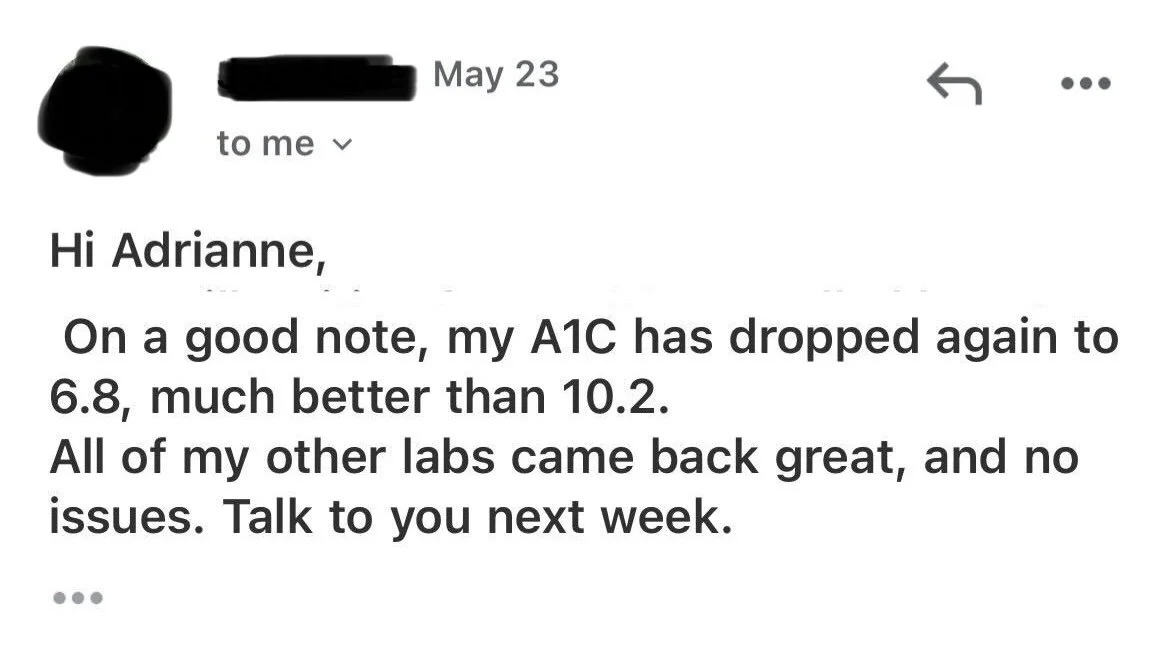
Instead of feeling trapped by his diagnosis or relying only on medications, he now understands what his body needs to keep blood sugar stable. This is what it looks like to address the root causes behind high blood sugar rather than just chasing numbers.
Can You Lower Your A1C Without Cutting Carbs Or Relying Only On Medications?
Yes, it is absolutely possible to:
• Lower A1C
• Improve insulin sensitivity
• Reduce blood sugar spikes
• Feel better in your day to day life
while still eating carbs, as long as you address the right things.
From Joe’s story, the key areas were
Calming chronic stress and the cell danger response
Eating more dense, balanced meals guided by biofeedback
Protecting sleep and circadian rhythm with a realistic evening routine
Your exact plan will look different, because your life, history, and body are different. But the principles are the same: Meet your body’s needs more effectively, so it does not have to rely on stress hormones to get through the day.
Ready To Work On Your Own A1C And Blood Sugar Story?
If you are trying to lower a high A1C, reverse type 2 diabetes, or stabilize blood sugar without cutting out carbs, it may be time for a more root cause approach. At The Pohlman Institute, our team helps clients just like Joe:
• Understand why their blood sugar is high in the first place
• Create a customized plan for nutrition, stress, and lifestyle
• Improve carb tolerance and insulin sensitivity
• Build routines that support long term blood sugar control
If you want support to do that for yourself, apply to work with me and my team here!